Loading
1724–1804
Immanuel Kant
The architect of critical philosophy whose limits on reason Iqbal both absorbs and overturns, placing him in direct parallel with al-Ghazali.
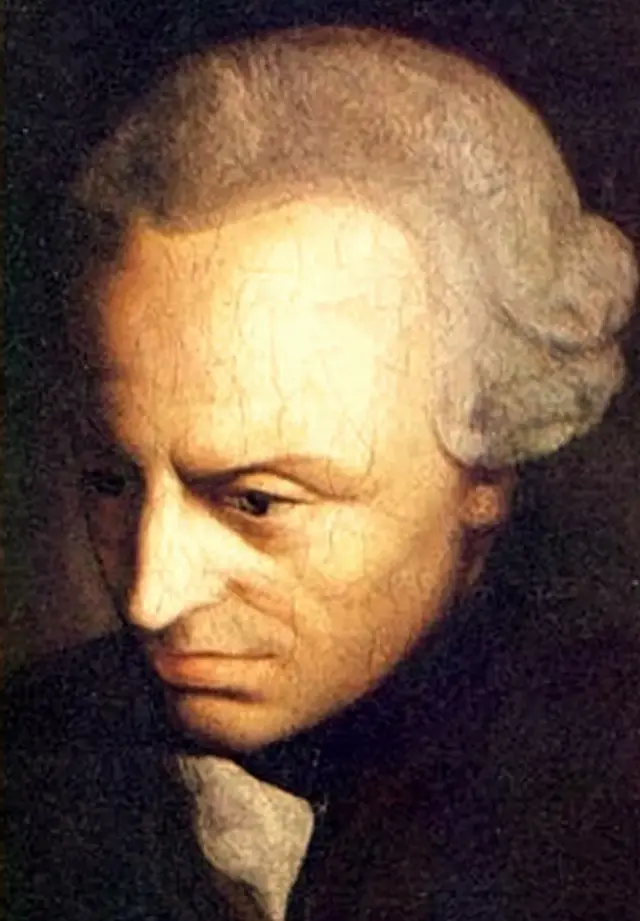
Immanuel Kant is the single most important philosopher in the Western tradition for understanding what Iqbal is doing in the Reconstruction. Kant’s critical philosophy established the framework that Iqbal must either accept or break through: the claim that human reason can know the world of experience (phenomena) but can never reach the thing-in-itself (the noumenon) — including God.
Iqbal’s engagement with Kant is dialectical in the deepest sense. He accepts Kant’s demolition of the classical proofs for God’s existence (ontological, cosmological, teleological). He absorbs Kant’s epistemological rigour. But he refuses Kant’s conclusion. Where Kant closes the door on metaphysical knowledge, Iqbal reopens it through religious experience — a mode of knowing that Kant did not seriously consider.
The most striking move in the Reconstruction is Iqbal’s parallel between Kant and al-Ghazali: both demolished the prevailing rational philosophy of their civilisation, both protected religion from rational refutation, but they diverged in their positive programmes. This comparison — placing a twelfth-century Muslim theologian alongside the titan of European Enlightenment — is Iqbal’s most ambitious historical claim.