Loading
1861–1947
Alfred North Whitehead
The mathematician-turned-philosopher whose process metaphysics provided Iqbal with a scientific and philosophical vocabulary for a dynamic, creative universe.
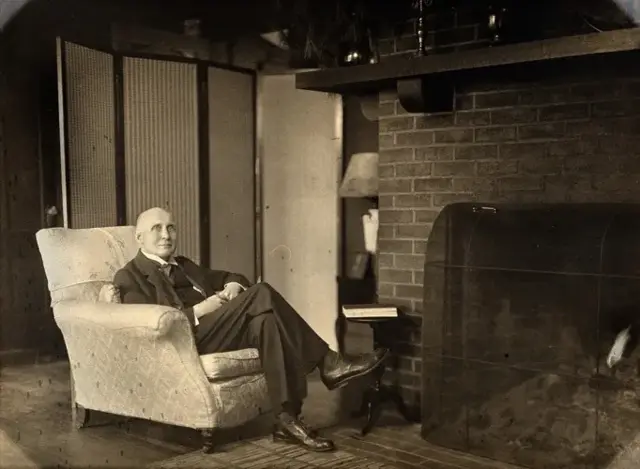
Alfred North Whitehead began his career as a mathematician — co-authoring Principia Mathematica with Bertrand Russell — before turning, in his sixties, to metaphysics. The result was process philosophy: the view that reality is not composed of static substances but of dynamic processes of becoming. Nothing simply is; everything is happening.
Iqbal’s invocation of Whitehead in the Reconstruction is not incidental. It signals that the lectures are engaging with the most advanced philosophical thought of their time. Whitehead’s Religion in the Making (1926) and Process and Reality (1929) were contemporary publications when Iqbal delivered the Madras lectures in 1928–1929. Iqbal was reading the cutting edge.
What Whitehead provided Iqbal was a respectable scientific-philosophical framework for claims that the Islamic tradition had long made on different grounds: that reality is creative, that the universe is an organism rather than a machine, and that God is not outside the process but intimately involved in it. Iqbal’s God is not Whitehead’s — Iqbal’s is personal and purposive where Whitehead’s is more abstract — but the process framework gave Iqbal philosophical credibility before a Western audience.