Loading
1877–1938
Muhammad Iqbal
Poet, philosopher, barrister, visionary — the man who wished someday ‘to see Iqbal.’
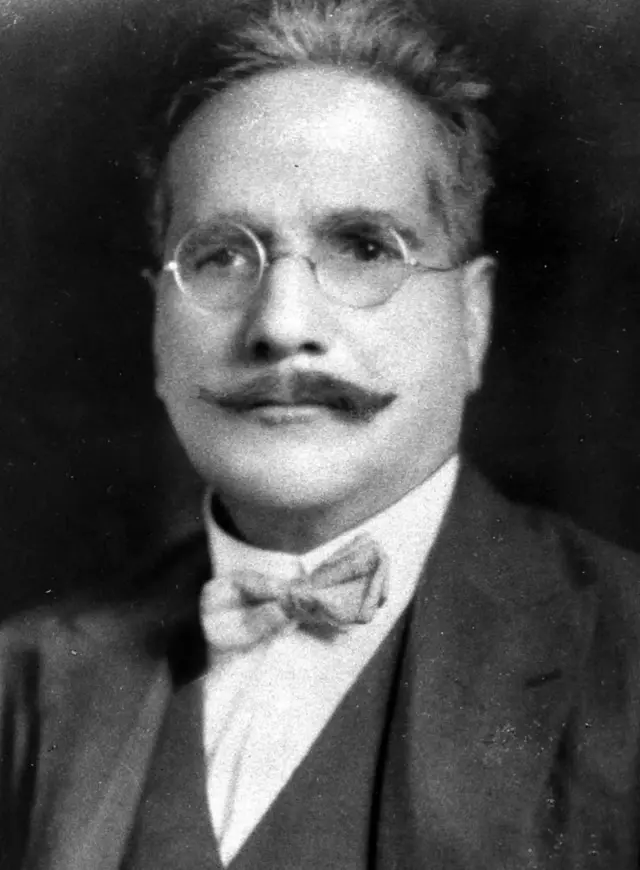
Muhammad Iqbal lived one of the most intellectually consequential lives of the twentieth-century Muslim world, moving from a tailor's household in Sialkot to the lecture halls of Cambridge and Munich, the courts of Lahore, the mosques of Córdoba and Jerusalem, and the political councils that would reshape South Asia.
He was simultaneously a philosopher who debated Bergson and McTaggart, a poet who claimed Rumi as his spiritual guide, a barrister with over 100 reported judgments, and the thinker who first articulated from a Muslim League platform the vision of a separate Muslim polity — all while struggling with financial hardship, failed marriages, and a mysterious throat illness that silenced him in his final years.
The sanitised national hero — the face on the banknote — obscures a far more interesting figure. What follows is a granular, dated reconstruction of that life across every dimension, built for the complex, contradictory man behind the national monument.